OptiCore Pro Official Website › Blog › Best Eye Health Supplements
Best Eye Health Supplements: 7 Checks Before You Trust a Top List
Top five lists and best rated charts are everywhere. Instead of ranking bottles, this guide gives you seven checks to run on any of them.
We do not rank other brands, because we cannot verify them. Use seven label checks on any bottle: printed amounts, blend size, lutein and zeaxanthin, trial amounts, zinc and copper, named forms and a reachable refund. Scored on ten checks, OptiCore Pro passes five, one partly and fails four.
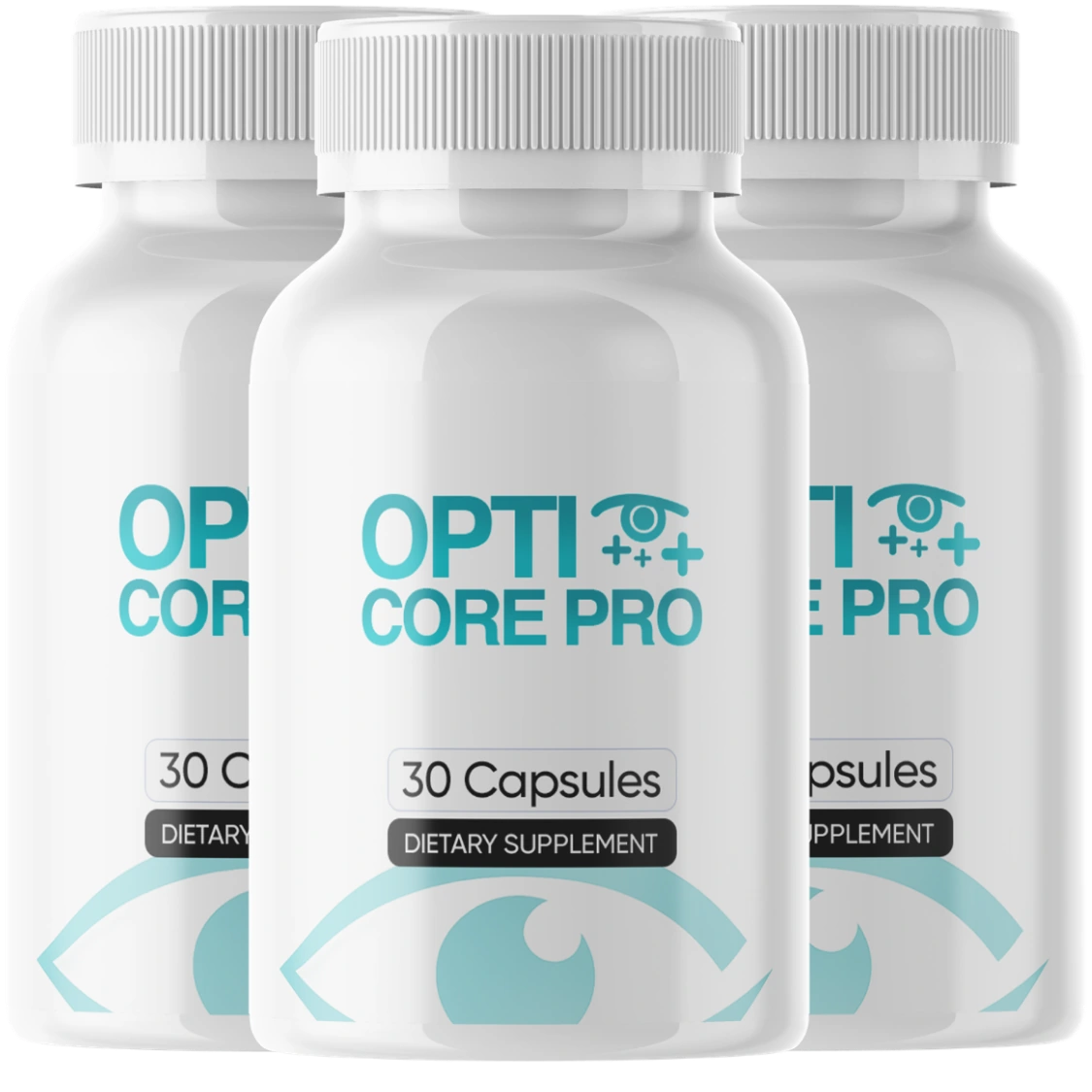
See one label scored in public
The official site publishes how OptiCore Pro does on the same checks, including the failures.
See today's price and guarantee
Earnings note: this website receives a payment when an order is placed through it. A bottle holds 30 capsules, one a day, and the checkout shows the current price before you pay.
- We do not name or rank other brands. A best list we cannot check is not a best list.
- Seven label checks work on any bottle and take about a minute each.
- Lutein 10 mg and zeaxanthin 2 mg are the AREDS2 amounts. Many bottles carry a fraction or none.
- Above roughly 25 mg of zinc, a missing copper row is a gap. Below it the question does not arise.
- OptiCore Pro passes 5 of 10 checks, scores one partial and fails 4. It is a broad multivitamin, not an AREDS2 formula.
- This website is paid when an order goes through it, so read its views with that in mind.
Check 1: Are all the amounts printed?
A Supplement Facts panel must give the amount of every declared nutrient. What it may hide is the split inside a proprietary blend. That is a legal format. It prints a total weight and a list of parts in descending order, with no figure for any one part.
This check comes first because everything else depends on it. An amount you cannot see is an amount you cannot compare with a trial.
Check 2: How big is the blend?
Blends are common. The question is proportion. A blend with a pinch of flavour is one thing. A blend that holds the very ingredients the front label is selling is another.
Compare the blend total to the rest of the panel. If the blend outweighs the declared nutrients, the bottle's most important number is the one nobody has published. Also compare it with single-plant trial doses. Several are larger than a whole blend.
Check 3: Are lutein and zeaxanthin there?
These two define a modern eye formula. AREDS2 gave 10 mg and 2 mg a day. A bottle with neither is a broad multivitamin with an eye-shaped label. It may still be a fair purchase. It is a different object from what many buyers think they are getting.
They sit in leafy greens and egg yolk, so a diet heavy in both already supplies some.
Check 4: Do the antioxidants come near the trials?
| Ingredient | AREDS amount | AREDS2 amount | OptiCore Pro |
|---|---|---|---|
| Vitamin C | 500 mg | 500 mg | 60 mg |
| Vitamin E | 400 IU | 400 IU | 7 mg |
| Zinc | 80 mg as zinc oxide | 80 mg and 25 mg tested | 3.62 mg |
| Lutein | None | 10 mg | None |
| Zeaxanthin | None | 2 mg | None |
A fraction of a trial dose is not a failure on its own, but nobody should call it an AREDS-type formula.
Check 5: If zinc is high, is copper there too?
Sustained high-dose zinc depletes copper, which is why both big trials carried 2 mg of cupric oxide. Above roughly 25 mg of zinc, a missing copper row is a real gap. Below it, the absence is consistent.
On this basis OptiCore Pro passes. Zinc is 3.62 mg, nowhere near the amount that depletes copper.
Check 6: Are the forms named, and do the seals name anybody?
The words in brackets hold the real dose. Magnesium oxide is absorbed less than magnesium citrate at the same weight. DL-alpha tocopheryl acetate is the synthetic vitamin E. Zinc oxide is what AREDS used. A panel that names its forms is being straightforward.
Seals are the other half. A seal that names its certifier can be looked up. Most seals on most packs name nobody. An FDA-registered facility mark refers to a filing, not an inspection or an approval. A GMP mark without a certifier's name describes a rule the law already requires of every maker.
Check 7: Can you actually get a refund, and who answers the phone?
This check is commercial, and it costs money when skipped. Find the window. Find out what day it starts from. Find out who pays return postage. Find a phone number that reaches someone who can see an order.
| Check | OptiCore Pro result | Why |
|---|---|---|
| 1. All amounts printed | Partial | 16 nutrients printed; the blend gives one total for 11 plants |
| 2. Blend and its size | Fail | 179.5 mg for 11 botanicals, no split |
| 3. Lutein and zeaxanthin | Fail | Neither on the panel |
| 4. Antioxidants near trials | Fail | Every amount is a fraction |
| 5. Copper with high zinc | Pass | Zinc is only 3.62 mg |
| 6. Forms named | Pass | Every row names its form |
| 7. Panel arithmetic | Pass | All 16 percentages recompute |
| 8. Allergen line | Pass | Contains: Soy, and the blend names soy sterols |
| 9. Seals name anybody | Fail | Three of four marks name nobody |
| 10. Reachable refund | Pass | 180 days from purchase, phone +1 (302) 200-3480 |
From the choosing-a-vision-supplement scorecard on this website. Five passes, one partial, four failures.
Even a bottle that passed all ten would not be a treatment for an eye condition. For that, see an eye doctor.
Which sources does this article use?
- The AREDS trial: https://pubmed.ncbi.nlm.nih.gov/11594942/
- AREDS2: https://pubmed.ncbi.nlm.nih.gov/23644932/
- The National Eye Institute's page on the two formulations: https://www.nei.nih.gov/research/clinical-trials/age-related-eye-disease-studies-aredsareds2/about-areds-and-areds2
- The 2023 Cochrane review: https://pubmed.ncbi.nlm.nih.gov/37702300/
- The Cochrane review on prevention: https://pubmed.ncbi.nlm.nih.gov/28756617/
- A comparison of magnesium salts: https://pubmed.ncbi.nlm.nih.gov/2407766/
- The AREDS zinc analysis: https://pubmed.ncbi.nlm.nih.gov/11925463/
- NCCIH's guidance on using supplements wisely: https://www.nccih.nih.gov/health/using-dietary-supplements-wisely
- MedlinePlus on macular degeneration: https://medlineplus.gov/maculardegeneration.html
Frequently asked questions
What is the best eye health supplement?
We do not name one. We cannot verify other brands, so we give seven checks you can run on any label instead.
Are top rated vision supplements better?
Not necessarily. A rating tells you about sales and reviews, not about the amounts. Check the panel yourself.
Which ingredients should I look for?
Check for lutein and zeaxanthin at trial-sized amounts, antioxidants near the trial figures, copper if zinc is high, and an allergen line that matches the ingredient list.
Does OptiCore Pro have lutein or zeaxanthin?
No. It carries neither, nor copper or omega-3. It is a broad multivitamin sold for the eye.
Should I choose a supplement over eye-care habits?
No. Breaks, a current prescription and screen position have direct evidence behind them. A supplement can sit alongside them.
Is any eye health supplement FDA approved?
No. The FDA does not approve dietary supplements, and none is intended to diagnose, treat, cure or prevent any disease.
Our view
A top list is an opinion with a commercial motive more often than not, and this website has one too, since it is paid when an order goes through it. So we point you to checks, not to names.
Run the seven checks on the bottle in your hand. If it passes the ones you care about, fine. If it fails, you have saved yourself money. Take any eye symptom to a doctor.
If your checks say yes
Order only if the amounts, the blend and the refund terms fit what you want. The checkout states your total before you confirm.
See today's price and guarantee
Earnings note: this website receives a payment when an order is placed through it. A bottle holds 30 capsules, one a day, and the checkout shows the current price before you pay.
Last updated