OptiCore Pro Official Website › Blog › Does OptiCore Pro Really Work
Does OptiCore Pro Really Work? 7 Checks on the Evidence Behind the Claims
Does OptiCore Pro work? Nobody can answer that with a single word. These seven checks show what the evidence can and cannot support.
No clinical study of the OptiCore Pro capsule is named in our sources. It is a broad multivitamin sold for everyday vision wellness and eye comfort. Its amounts are a fraction of the eye-trial amounts, so it may help most if your diet is short of those nutrients.
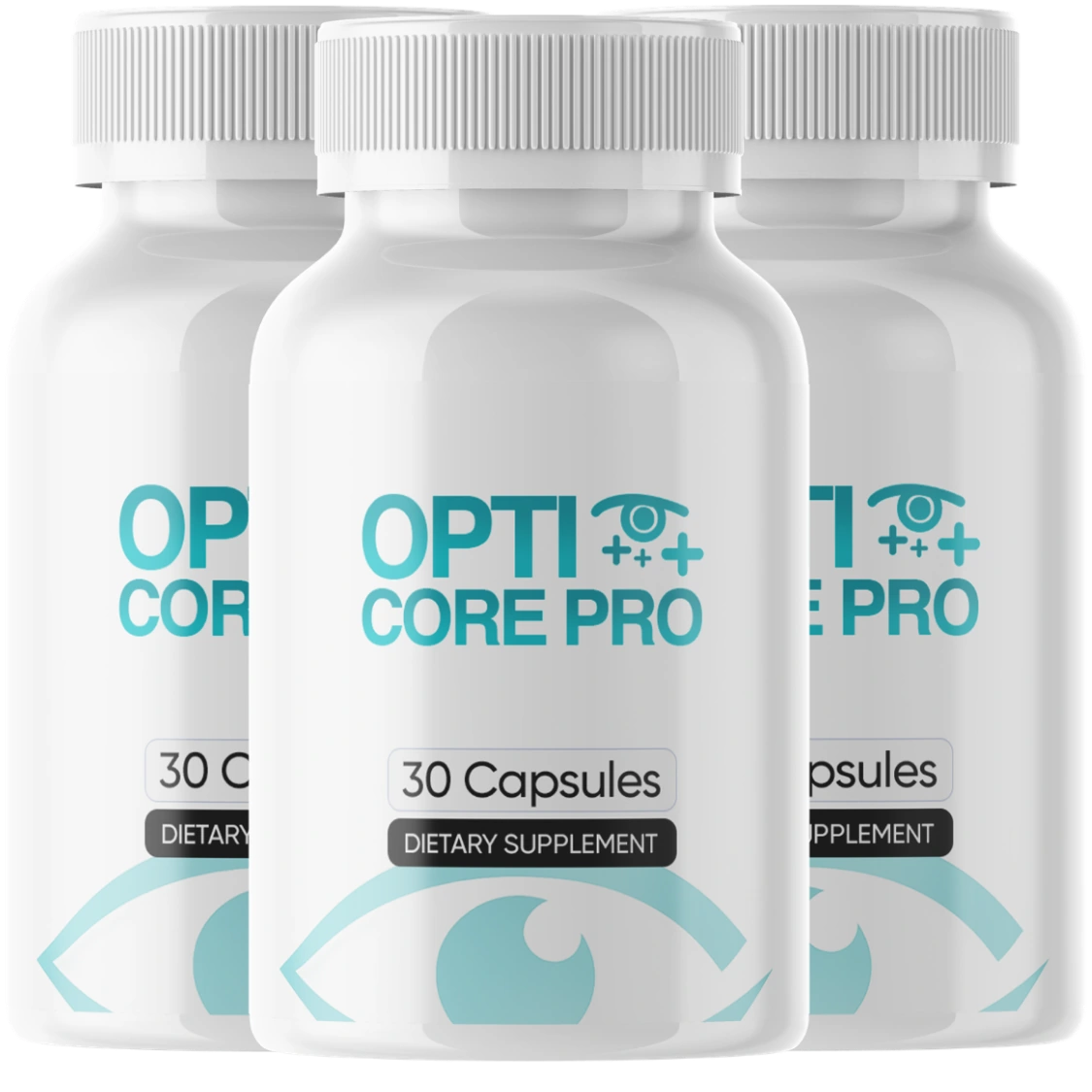
Judge the label first, then the price
The official page shows the packs and the 180-day terms, so you can weigh them against the seven checks below.
See today's price and guarantee
Earnings note: this website receives a payment when an order is placed through it. A bottle holds 30 capsules, one a day, and the checkout shows the current price before you pay.
- The seller claims two things only: everyday vision wellness, and eye comfort from screens and close work.
- No benefit sentence is printed on the bottle.
- No clinical study of the finished capsule is named in the sources this site uses.
- Vitamin C is 60 mg against 500 mg in AREDS. Vitamin E is 7 mg against 400 IU. Zinc is 3.62 mg against 80 mg.
- None of the eleven botanicals has a published trial measuring a vision outcome.
- It does not restore vision, change a prescription or treat an eye disease.
What are the 7 checks on whether OptiCore Pro works?
Each check asks a plain question. Together they show where the claim stops.
- What exactly is claimed?
The seller's page says two things: everyday vision wellness, and eye comfort and strain from screens and demanding close work. We repeat those two and add nothing to them.
- Does the bottle claim anything?
No. The printed text is the wordmark, 30 Capsules, DIETARY SUPPLEMENT, suggested use, storage, caution, origin line, distributor block, the Supplement Facts panel and the FDA disclaimer. There is no benefit sentence on it.
- Is there a clinical study of this capsule?
None is named in the sources we use, so we call it not published. A guarantee is a purchase policy, not proof.
- Do the amounts match the eye trials?
They are a fraction. See the table below. Lutein, zeaxanthin, copper and omega-3 are not on the label at all.
- Does the plant blend have vision trials?
No. None of the eleven botanicals has a published trial measuring a vision outcome. Several have trials for other things, such as nettle root for prostate and saw palmetto for hair, at amounts larger than the whole blend weighs.
- What do the real eye trials show?
AREDS and AREDS2 tested high-dose formulas in people who already had macular disease, and measured whether it progressed. The Cochrane review on prevention looked at people without the condition and found no evidence these nutrients stop it starting.
- What has evidence for screen comfort?
Breaks from near work, blinking, screen height, humidity and a current glasses prescription. A capsule is a supplement to those, not a substitute.
How do the OptiCore Pro amounts compare with the eye trials?
Only a few nutrients on the label overlap with the two landmark trials. The overlap is small.
| Ingredient | On the OptiCore Pro label | In the published trials |
|---|---|---|
| Vitamin C | 60 mg | 500 mg a day in AREDS, kept in AREDS2 |
| Vitamin E (DL-alpha) | 7 mg | 400 IU a day in AREDS, roughly forty times more |
| Zinc (oxide) | 3.62 mg | 80 mg in AREDS. AREDS2 tested 80 mg and 25 mg. |
| Vitamin A (beta-carotene) | 60 mcg RAE | 15 mg of beta-carotene in AREDS, later removed |
| Lutein | Not on this label | 10 mg a day in AREDS2 |
| Zeaxanthin | Not on this label | 2 mg a day in AREDS2 |
| Biotin | 2,500 mcg (8,333.5% DV) | No vision trial at any dose |
The trial figures are from the AREDS and AREDS2 papers and the National Eye Institute page.
A smaller amount is not automatically a failure. It does mean the trial results cannot be borrowed for this capsule. Anyone who describes OptiCore Pro as an AREDS-type formula is wrong.
When could a multivitamin like OptiCore Pro help?
The best argument for the capsule is nutrient adequacy. Vitamins A, C and E, zinc and the B group all have roles in eye tissue. If you were short of one, topping it up is worth something.
The same logic cuts the other way. If you already eat enough of them, there is no gap to fill and no reason to expect a change. NCCIH makes the same point about supplements in general. A person with a narrow diet and long days at a screen is the buyer this argument fits best.
The antioxidant argument is plausible but weak at these amounts, because the trials used doses several times larger in people with existing disease.
What does OptiCore Pro not do?
- It does not sharpen sight or reduce your need for glasses.
- It does not treat or prevent macular degeneration, cataract, glaucoma or diabetic retinopathy.
- It is not the AREDS2 formulation.
- It makes no claim about night vision, glare or blue light.
- It is not a replacement for an eye examination.
The seller makes none of those claims, and we do not either. A refund window is a purchase policy. It does not mean the capsule does anything.
What helps tired eyes alongside a capsule?
A 2026 review describes digital eye strain as two problems under one name. One is on the surface, where blinking drops and the tear film breaks up. The second sits in focusing, where the eye stays set on one near distance for hours.
The surface half responds to blinking, humidity and screen height. Omega-3 has dry-eye trials, but it is not on this label. The focusing half responds to breaks and a correct prescription. A trial of the 20-20-20 rule tested the best-known break habit. The American Academy of Ophthalmology lists the rest.
Pain, flashes, a shower of new floaters, a curtain across your sight or a sudden drop in vision need an eye doctor the same day. They are not supplement questions.
Which sources does this article use?
- The AREDS trial: https://pubmed.ncbi.nlm.nih.gov/11594942/
- AREDS2: https://pubmed.ncbi.nlm.nih.gov/23644932/
- The 2023 Cochrane review: https://pubmed.ncbi.nlm.nih.gov/37702300/
- The Cochrane review on prevention: https://pubmed.ncbi.nlm.nih.gov/28756617/
- The National Eye Institute's page on the two formulations: https://www.nei.nih.gov/research/clinical-trials/age-related-eye-disease-studies-aredsareds2/about-areds-and-areds2
- A 2026 review of digital eye strain: https://pubmed.ncbi.nlm.nih.gov/41804380/
- A trial of the 20-20-20 rule: https://pubmed.ncbi.nlm.nih.gov/35963776/
- A meta-analysis of omega-3 for dry eye: https://pubmed.ncbi.nlm.nih.gov/38002640/
- The American Academy of Ophthalmology on computer use and eye strain: https://www.aao.org/eye-health/tips-prevention/computer-usage
- NCCIH's guidance on using supplements wisely: https://www.nccih.nih.gov/health/using-dietary-supplements-wisely
Frequently asked questions
Does OptiCore Pro really work?
That depends on what you mean by work. It is a multivitamin with an eye-shaped label. No clinical study of the capsule is published, and it makes no claim to change sight.
Are there clinical studies on OptiCore Pro?
None is named in the sources this site uses. The trials discussed here, AREDS and AREDS2, tested different formulas at much larger amounts.
Is OptiCore Pro the same as the AREDS2 formula?
No. AREDS2 used lutein 10 mg, zeaxanthin 2 mg and copper 2 mg with high-dose vitamins C and E and zinc. This label carries none of the first three and a fraction of the rest.
Will OptiCore Pro improve my eyesight?
No. The seller does not claim it will. Sharpness of sight depends on the shape of the eye, and a prescription is a matter for an eye test.
Who might benefit from OptiCore Pro?
Mostly a person whose diet is short of the nutrients on the panel and who wants one capsule instead of several bottles. If your diet is already good, expect less.
What should I do about tired eyes from screens?
Take regular breaks, blink deliberately, keep your screen a little below eye level and keep your prescription current. A capsule is an extra, not a replacement.
Our view
Our view is narrow on purpose. OptiCore Pro is a broad daily multivitamin with an eye-shaped label. For a buyer short on those nutrients, that has a plain use. As a route to sharper sight or protection from disease, it has no support in our sources.
The missing piece is a published study of the finished capsule. Until one exists, your own weekly notes are the best evidence you can collect, and the 180-day window gives you time to gather them.
Ask your eye doctor about any eye condition. They can tell you things no product page can.
Buy for what it is
OptiCore Pro is a daily multivitamin built around the eye, with a long written refund window. The checkout shows your total first.
See today's price and guarantee
Earnings note: this website receives a payment when an order is placed through it. A bottle holds 30 capsules, one a day, and the checkout shows the current price before you pay.
Last updated