OptiCore Pro Official Website › Blog › OptiCore Pro Clinical Studies
OptiCore Pro Clinical Studies: 5 Steps to Find Out What Was Tested
People search for OptiCore Pro clinical studies and expect one paper. The honest answer takes five steps, because the studies you find are about other products.
Our sources name no clinical trial of the OptiCore Pro capsule itself. The studies cited around eye supplements, AREDS and AREDS2, tested different formulas at much higher amounts. Lutein, zeaxanthin and copper are not on this label. Treat any claim of a study on this exact capsule as unverified until you see the paper.
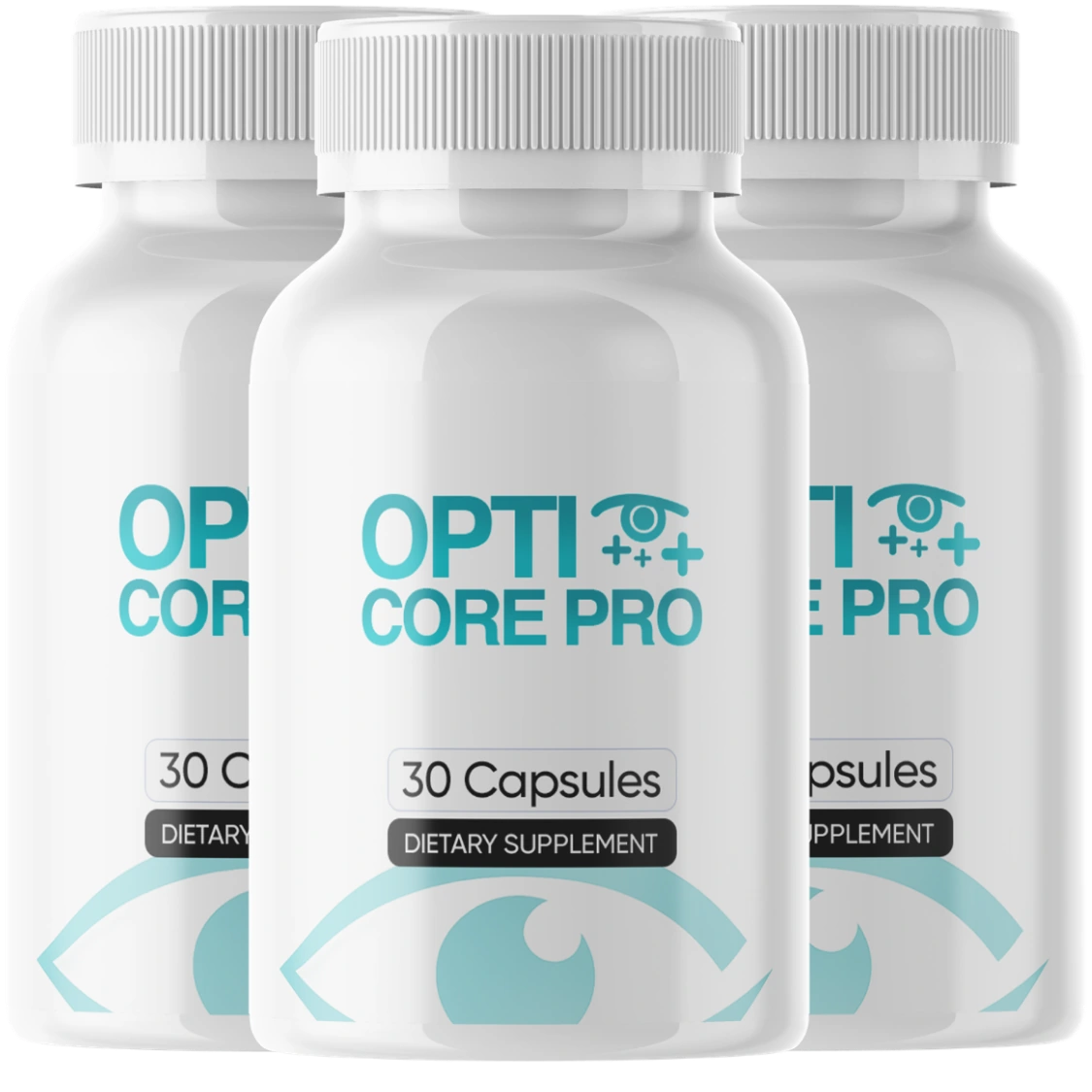
Read the label next to the trial numbers
The official page prints each amount on the bottle, so you can set it beside the trial amounts yourself.
See today's price and guarantee
Earnings note: this website receives a payment when an order is placed through it. A bottle holds 30 capsules, one a day, and the checkout shows the current price before you pay.
- No clinical trial of the finished OptiCore Pro capsule is named in our sources. A study on this exact capsule is not published here.
- AREDS used vitamin C 500 mg, vitamin E 400 IU, zinc 80 mg and copper 2 mg. This label carries C 60 mg, E 7 mg and zinc 3.62 mg, with no copper.
- AREDS2 added lutein 10 mg and zeaxanthin 2 mg. This label has neither.
- Biotin is the largest figure, at 2,500 mcg. No vision trial of biotin exists at any dose.
- The 179.5 mg botanical blend is lighter than the single-plant trial doses of saw palmetto (320 mg) and nettle root (450 mg).
- OptiCore Pro is not FDA approved, and it does not treat any eye disease.
Step 1: Is there a clinical study of the OptiCore Pro capsule itself?
Not in our sources. The seller's page names no trial, the bottle names none, and the facts we hold list no study on the finished capsule. We write that as not published. We do not say that no study exists anywhere, because we cannot prove that. We say none is shown to a buyer.
When a page says clinically proven, ask for the paper. A real study names the product, the amount, the people tested, how long it ran and what was measured. If any of those is missing, you have a slogan.
Step 2: Which famous studies sit behind eye supplements?
Two large trials built the category. The Age-Related Eye Disease Study, or AREDS, was published in 2001 and ran for more than six years. AREDS2 followed in 2013. Both enrolled people who already had macular disease. Their result is about slowing progression, not about preventing the disease in healthy eyes.
| Ingredient | AREDS daily amount | AREDS2 daily amount | On this label |
|---|---|---|---|
| Vitamin C | 500 mg | 500 mg | 60 mg |
| Vitamin E | 400 IU | 400 IU | 7 mg |
| Beta-carotene | 15 mg | Removed | Vitamin A 60 mcg RAE as beta-carotene |
| Zinc | 80 mg as zinc oxide | 80 mg and 25 mg tested | 3.62 mg as zinc oxide |
| Copper | 2 mg | 2 mg | Not on label |
| Lutein | None | 10 mg | Not on label |
| Zeaxanthin | None | 2 mg | Not on label |
Trial amounts from the National Eye Institute's description of the two formulas. Label amounts from the printed Supplement Facts panel.
The gap is the point. The overlap is a small fraction of the trial amounts, and the three things AREDS2 is known for are missing. So these trials do not carry over to this capsule.
Step 3: What do reviews of those trials conclude?
The 2023 Cochrane review is the best summary of what the high-dose formulas achieved in people who already had macular disease. Its companion review on prevention looked at people who did not have the condition. The evidence there that these nutrients prevent it is not found.
A third finding matters for shoppers. AREDS2 tested omega-3 fats and saw no added benefit for macular disease. Omega-3 has its own research for dry eye. This label carries none.
Step 4: Do the plants in the blend have eye studies?
The blend weighs 179.5 mg in total and covers 11 botanicals. The label does not print a figure for any one of them. They are listed in order, heaviest first.
| Plant | Where its human trials sit | Typical trial amount |
|---|---|---|
| Saw palmetto | Prostate symptoms and hair loss | 320 mg a day |
| Nettle root | Urinary symptoms | 450 mg a day |
| Plant sterols | LDL cholesterol | About 2 g a day |
| Fo-Ti | Liver injury case reports | Not a benefit finding |
None of the six botanicals reviewed on this website has a published trial that measured a vision outcome.
So the blend rests on traditional use and a general antioxidant argument. Its total weight is less than the single-plant doses used in those trials. That does not make it harmful. It means no study can be matched to it.
Step 5: What can you do about the missing evidence?
Use the evidence that does exist for screens. A 2026 review describes eye strain as a surface problem plus a focusing problem. Neither is mainly nutritional. A trial of the 20-20-20 break rule tested the most quoted habit, and another paper asks where those numbers came from. The American Academy of Ophthalmology sets out the free steps.
Ask for the paper
If a page says a study proves this capsule works, ask for the title, the product tested and the amount.
Match the amount
Set the label amount next to the trial amount. A fraction is not the trial dose.
Match the people
A trial in people with macular disease says little about a healthy adult with tired eyes.
Do the free things too
Breaks, an up-to-date prescription, a lower screen and blinking all have evidence behind them.
Give it a fair test
Keep dated notes for twelve weeks and use the 180-day window if you want your money back.
Who should ask a doctor before relying on a supplement?
Anyone with a diagnosed eye condition should follow their eye doctor, not a supplement page. The National Eye Institute and MedlinePlus are free starting points for macular disease. The label asks pregnant and nursing mothers, children under 18 and anyone with a known medical condition to speak to a physician first. It contains soy.
Biotin at 2,500 mcg can skew some blood tests, including thyroid panels and troponin. Tell the laboratory. Fo-Ti and PABA both have published liver reports, and the dose in the blend is unknown, so anyone with liver disease should ask first.
Which sources does this article use?
- The AREDS trial: https://pubmed.ncbi.nlm.nih.gov/11594942/
- AREDS2: https://pubmed.ncbi.nlm.nih.gov/23644932/
- The National Eye Institute's page on the two formulations: https://www.nei.nih.gov/research/clinical-trials/age-related-eye-disease-studies-aredsareds2/about-areds-and-areds2
- The 2023 Cochrane review: https://pubmed.ncbi.nlm.nih.gov/37702300/
- The Cochrane review on prevention: https://pubmed.ncbi.nlm.nih.gov/28756617/
- NCCIH's guidance on using supplements wisely: https://www.nccih.nih.gov/health/using-dietary-supplements-wisely
- A 2026 review of digital eye strain: https://pubmed.ncbi.nlm.nih.gov/41804380/
- A trial of the 20-20-20 rule: https://pubmed.ncbi.nlm.nih.gov/35963776/
- A paper asking where the 20-20-20 numbers came from: https://pubmed.ncbi.nlm.nih.gov/36473088/
- A meta-analysis of omega-3 for dry eye: https://pubmed.ncbi.nlm.nih.gov/38002640/
- MedlinePlus on macular degeneration: https://medlineplus.gov/maculardegeneration.html
- The National Eye Institute on age-related macular degeneration: https://www.nei.nih.gov/learn-about-eye-health/eye-conditions-and-diseases/age-related-macular-degeneration
Frequently asked questions
Is there a clinical trial of OptiCore Pro?
None is named in our sources. A study on the finished capsule is not published here, so treat any such claim as unverified until you see the paper.
Is OptiCore Pro the same as the AREDS2 formula?
No. AREDS2 is defined by lutein 10 mg, zeaxanthin 2 mg and copper 2 mg. This label carries none of the three, and its vitamin and zinc amounts are a fraction of the trial amounts.
Do the plants in the blend have eye studies?
None of the botanicals we reviewed has a published trial that measured a vision outcome. Their trials measured other things, such as prostate symptoms or cholesterol.
Does biotin help vision?
No vision trial of biotin exists at any dose. The 2,500 mcg figure matches what hair and nail capsules use, and it can affect some blood tests.
What does the Cochrane review say?
The 2023 review looked at what the high-dose formulas did in people who already had macular disease. Its companion on prevention found no evidence that the same nutrients prevent the condition in people who do not have it.
Is OptiCore Pro FDA approved?
No. It is not FDA approved, and no supplement is. It is not intended to diagnose, treat, cure or prevent any disease.
Our view
The honest summary is short. This is a broad multivitamin sold for the eye, and there is no published trial of it in our sources. The famous studies are real, but they tested other formulas at far higher amounts.
If a lighter product with a long refund window suits you, that is a fair reason to try it. If you are hoping for what AREDS2 showed, buy the right object and talk to your eye doctor first.
If the evidence level suits you
This is a broad multivitamin with an eye-shaped label, with a 180-day refund window from the day you pay. Order only if that is what you want.
See today's price and guarantee
Earnings note: this website receives a payment when an order is placed through it. A bottle holds 30 capsules, one a day, and the checkout shows the current price before you pay.
Last updated