OptiCore Pro Official Website › Blog › AREDS And AREDS2
AREDS And AREDS2: The Trials Behind Every Eye Supplement
Almost every eye supplement on the market borrows its credibility from two trials, and almost none of them carries the amounts those trials used. Here is what AREDS and AREDS2 were, in whom they were run, what they found, and what the phrase "AREDS2 formula" on a label does and does not mean.
The 2001 trial, and why it was unusual
Nutritional supplements are rarely tested the way drugs are. The Age-Related Eye Disease Study was an exception: a randomised, placebo-controlled trial run by the National Eye Institute across eleven centres, following 3,640 people for an average of more than six years.
The formulation was deliberately aggressive. Vitamin C 500 mg, vitamin E 400 IU, beta-carotene 15 mg, zinc 80 mg as zinc oxide and copper 2 mg as cupric oxide, taken every day. Those are not maintenance amounts and they were never intended to be.
The result was modest and real. In participants with intermediate or advanced disease in one eye, the combination reduced the risk of progressing to advanced macular degeneration over five years. In participants with no or early signs, it did nothing measurable.
| Ingredient | AREDS, 2001 | AREDS2, 2013 | A typical shelf multivitamin |
|---|---|---|---|
| Vitamin C | 500 mg | 500 mg | 60 to 90 mg |
| Vitamin E | 400 IU | 400 IU | 7 to 15 mg |
| Beta-carotene | 15 mg | Removed | Trace, as vitamin A |
| Lutein | None | 10 mg | None |
| Zeaxanthin | None | 2 mg | None |
| Zinc | 80 mg | 80 mg and 25 mg both tested | 3 to 15 mg |
| Copper | 2 mg | 2 mg | 0 to 2 mg |
| Omega-3 | None | DHA 350 mg + EPA 650 mg, tested | None |
The two middle columns are the published trial formulations. The right-hand column is a typical range for an ordinary multivitamin and is there for scale.
What AREDS2 changed, and why
AREDS2 was published twelve years later and set out to improve the original in two ways. It asked whether lutein and zeaxanthin could replace beta-carotene, and whether adding omega-3 fatty acids helped.
The lutein and zeaxanthin question was answered in the affirmative, at 10 mg and 2 mg a day. The substitution performed comparably to beta-carotene and carried none of its baggage, which is why the modern formulation is the one with the carotenoids in it.
The omega-3 question was answered in the negative. DHA 350 mg and EPA 650 mg a day added nothing to the progression endpoint. That is a clean null from a well-powered trial, and it is the reason a fish oil capsule is not part of the standard formulation.
A separate report from the same trial looked at lutein and zeaxanthin for cataract, and a ten-year follow-up confirmed that the substitution held up over a much longer horizon. The National Eye Institute's own page prints both formulations ingredient by ingredient and is free to read.
Who these trials were actually run in
This is the part most often dropped, and it changes what the results mean for somebody reading a label in a shop.
| Who was studied | What was measured | What was found | |
|---|---|---|---|
| AREDS | 3,640 people aged 55 to 80 with signs of age-related macular degeneration | Progression to advanced disease, and visual acuity loss | A reduction in progression in the higher-risk categories over six years |
| AREDS2 | 4,203 people at high risk of progression | The same progression endpoint, plus a separate cataract report | Lutein and zeaxanthin performed comparably to beta-carotene; omega-3 added nothing |
| AREDS2 at ten years | The same cohort, followed further | Long-term progression | The lutein and zeaxanthin substitution held up over the longer horizon |
| Prevention, reviewed separately | People without the condition | Whether these nutrients prevent it developing | No evidence that they do |
Every row is about people who already had macular changes, except the last. That distinction is the one most often dropped when these trials are quoted.
Everybody in AREDS and AREDS2 already had macular changes. The trials measured whether a high-dose formulation slowed the progression of an existing condition, not whether it improved vision, sharpened sight or prevented anything from starting.
That last question was asked separately and answered separately. A Cochrane review of prevention looked at whether antioxidant vitamins and minerals stop age-related macular degeneration developing in people who do not have it, and found no evidence that they do.
- They established a reduction in progression in people who already had intermediate or advanced disease.
- They did not establish any improvement in vision for anybody.
- They did not establish prevention in people with healthy eyes.
- They used amounts far above anything an ordinary multivitamin carries.
- They were run over years, and the follow-up reported at ten.
Read the OptiCore Pro panel against those two columns
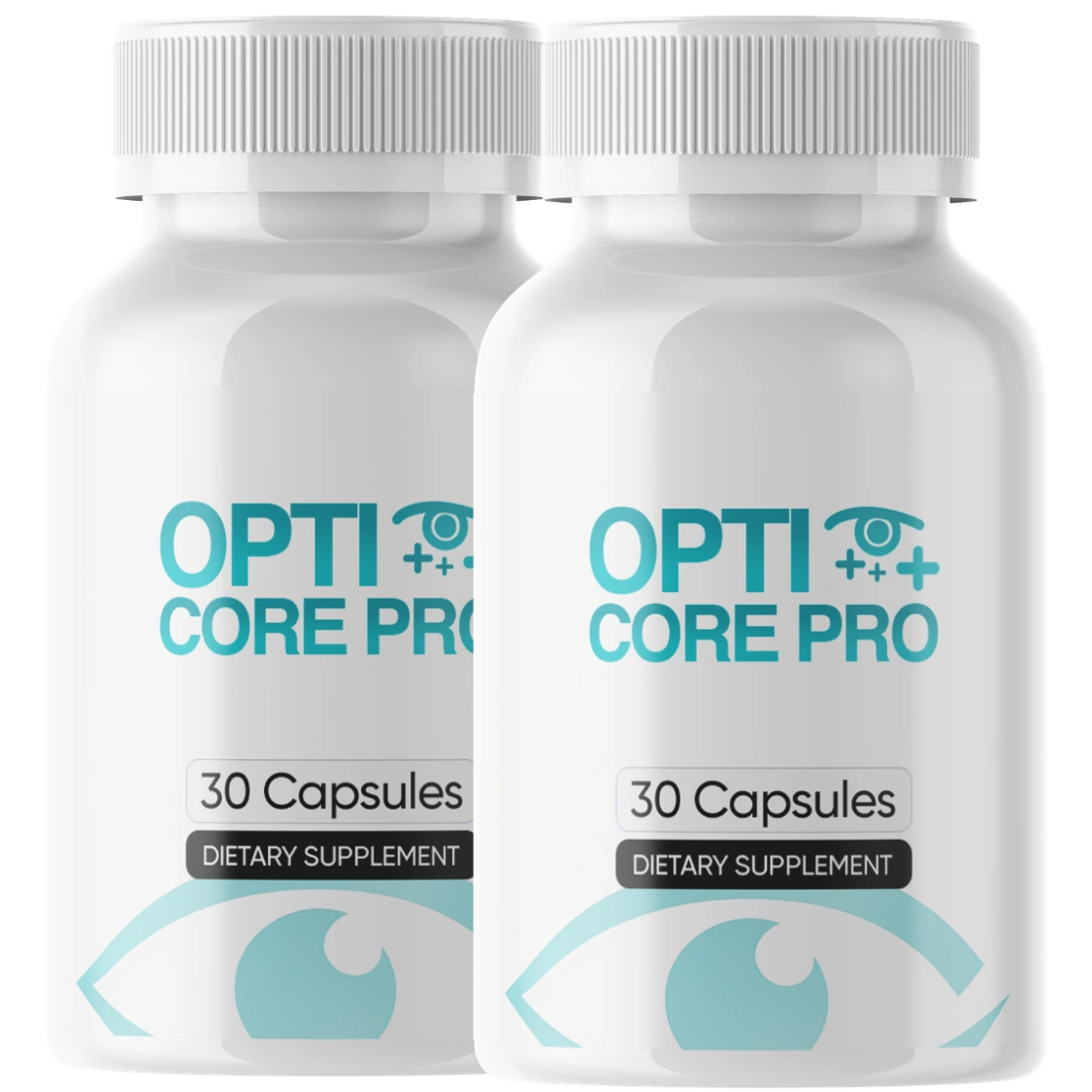
Sixteen printed amounts, one capsule a day, and a comparison with both formulations on the supplement facts page.
Two bottles $158 · six bottles $294 · 180-day money-back guarantee
Order OptiCore Pro On The Official WebsiteOne capsule a day · 30 per bottle · lot OPT-26/TH-5176
Why beta-carotene left the formula
The reason has nothing to do with eyes. It comes from two large cancer prevention trials that were running in parallel with the first eye study.
The ATBC trial gave 20 mg of beta-carotene a day to 29,133 male smokers and reported more lung cancer in the beta-carotene arm, not less. The CARET trial gave 30 mg with retinyl palmitate and was stopped twenty-one months early for the same signal.
Those findings did not overturn the eye result, but they made a 15 mg daily dose of beta-carotene an uncomfortable thing to recommend to a population that includes former smokers. Replacing it with two carotenoids that concentrate in the macula and carry no such signal was the obvious improvement, and it is what AREDS2 tested.
A nutrient that is harmless in food is not automatically harmless in a capsule at twenty times the dietary amount. Two large trials had to be run before that was accepted, and the same caution applies to any ingredient sold at a large multiple of its Daily Value.
The zinc question, and the useful number
Zinc is the mineral most associated with this category and 80 mg a day is the figure everybody quotes. It is also an amount almost no supplement carries, because 80 mg is more than seven Daily Values and is not a maintenance dose.
AREDS2's second arm is more useful for reading a label. It tested 25 mg against 80 mg and found the lower amount performed as well. Twenty-five milligrams is a figure a real supplement might plausibly carry, which makes it the right benchmark for anybody comparing bottles.
Copper travels with zinc in both formulations for one specific reason: sustained high-dose zinc depletes copper through competitive absorption. That is why a label carrying large amounts of zinc without copper is worth a second look, and why a label carrying a modest amount of zinc raises no such question.
- 80 mg is the headline figure and is almost never found on a shelf product.
- 25 mg is the amount that performed equally well and is the practical benchmark.
- Copper at 2 mg is there to offset the zinc, not for its own sake.
- Below roughly 25 mg of zinc, the copper question does not arise at all.
The question the trials did not answer
Somebody in their forties, spending nine hours a day at a screen, with no diagnosed eye condition, is the person most eye supplements are actually sold to. Neither trial says anything about that person.
The honest position is that the evidence for supplementation in healthy eyes is absent rather than negative. Nobody has shown these nutrients prevent anything in people who do not have the condition, and the review that looked specifically found no evidence for it.
That does not make a daily multivitamin a bad purchase for somebody whose diet is narrow. It makes the reason for buying one nutritional adequacy rather than disease prevention, and those are different arguments with different evidence behind them.
Reading AREDS2 on a label
The phrase appears on a great many bottles and it is not a protected term. Three readings are common and only one of them is accurate.
A genuine AREDS2 formulation
Carries all six ingredients at the trial amounts: vitamin C 500 mg, vitamin E 400 IU, lutein 10 mg, zeaxanthin 2 mg, zinc at 80 or 25 mg, copper 2 mg. These exist, usually sold through pharmacies and often described as being for people with a diagnosis.
AREDS2-based, or AREDS2-inspired
Usually means some of the ingredients at some of the amounts. The phrase has no definition, so the only way to know is to read the panel and do the arithmetic against the table near the top of this article.
Neither, but sold in the same aisle
A broad multivitamin with an eye-shaped label, which is the largest group by a distance and includes the product sold on this website. OptiCore Pro carries vitamin C at 60 mg, vitamin E at 7 mg and zinc at 3.62 mg, and no lutein, zeaxanthin or copper at all. That is a different kind of object from the two columns above and this desk says so on every page where it is relevant.
The practical advice fits in a sentence. If a bottle claims the trial's authority, check the trial's amounts, because the claim is free and the amounts are not.
The scorecard on the choosing a vision supplement page turns that into ten checks you can run on anything.
References
- Age-Related Eye Disease Study Research Group. A randomized, placebo-controlled, clinical trial of high-dose supplementation with vitamins C and E, beta carotene, and zinc for age-related macular degeneration and vision loss: AREDS report no. 8. Arch Ophthalmol. 2001;119(10):1417-36. PMID 11594942. https://pubmed.ncbi.nlm.nih.gov/11594942/
- Age-Related Eye Disease Study 2 Research Group. Lutein + zeaxanthin and omega-3 fatty acids for age-related macular degeneration: the Age-Related Eye Disease Study 2 (AREDS2) randomized clinical trial. JAMA. 2013;309(19):2005-15. PMID 23644932. https://pubmed.ncbi.nlm.nih.gov/23644932/
- Age-Related Eye Disease Study 2 (AREDS2) Research Group, Chew EY, SanGiovanni JP, Ferris FL, et al. Lutein/zeaxanthin for the treatment of age-related cataract: AREDS2 randomized trial report no. 4. JAMA Ophthalmol. 2013;131(7):843-50. PMID 23645227. https://pubmed.ncbi.nlm.nih.gov/23645227/
- Chew EY, Clemons TE, Agron E, Domalpally A, et al. Long-term outcomes of adding lutein/zeaxanthin and omega-3 fatty acids to the AREDS supplements on age-related macular degeneration progression: AREDS2 report 28. JAMA Ophthalmol. 2022;140(7):692-698. PMID 35653117. https://pubmed.ncbi.nlm.nih.gov/35653117/
- Evans JR, Lawrenson JG. Antioxidant vitamin and mineral supplements for preventing age-related macular degeneration. Cochrane Database Syst Rev. 2017;7(7):CD000253. PMID 28756617. https://pubmed.ncbi.nlm.nih.gov/28756617/
- About AREDS and AREDS2. National Eye Institute, National Institutes of Health. https://www.nei.nih.gov/research/clinical-trials/age-related-eye-disease-studies-aredsareds2/about-areds-and-areds2
- Alpha-Tocopherol, Beta Carotene Cancer Prevention Study Group. The effect of vitamin E and beta carotene on the incidence of lung cancer and other cancers in male smokers. N Engl J Med. 1994;330(15):1029-35. PMID 8127329. https://pubmed.ncbi.nlm.nih.gov/8127329/
- Omenn GS, Goodman GE, Thornquist MD, Balmes J, et al. Effects of a combination of beta carotene and vitamin A on lung cancer and cardiovascular disease. N Engl J Med. 1996;334(18):1150-5. PMID 8602180. https://pubmed.ncbi.nlm.nih.gov/8602180/
Order OptiCore Pro knowing exactly what it is
A broad daily multivitamin built around the eye rather than a trial formulation, with 180 days from the date of purchase to change your mind.
Two bottles $158 · six bottles $294 · 180-day money-back guarantee
Order OptiCore Pro On The Official WebsiteOne capsule a day · 30 per bottle · lot OPT-26/TH-5176